How Immersive Entertainment Revitalizes Workplace Education and Group Dynamics
Data collected from global workforce engagement studies indicates that standard lecture-based corporate training models yield information retention rates as low as ten percent within just one week of a presentation. This massive drop-off occurs because passive listening fails to stimulate the neural pathways required for long-term memory consolidation, which essentially leaves employees mentally exhausted and disconnected from core business objectives.
To combat this drain on corporate resources, forward-thinking organizations utilize gamified training structures. These structures require real-time problem-solving, rapid physical inputs, and immediate cognitive feedback loops. Integrating structured competition into educational modules shifts the participant dynamic from passive compliance to active investment, maximizing the financial return on your professional development budgets.
Let us look at this realistically: have you ever spent hours building a beautiful slide deck for a quarterly review, only to look up and see your team zoning out by slide four? It is a frustrating, familiar gut punch for anyone managing corporate training modules or large-scale company huddles because you want to drop serious knowledge, but your crew is busy thinking about lunch or answering urgent messages under the table.
This is the exact moment where throwing out the old playbook and changing the medium saves your day. Bringing a professional competition format into the mix instantly snaps people back to attention, turning a dry, mandatory room into an active, buzzing crowd.
The Psychological Impact of Interactive Formats on Adult Learning
What actually happens inside an employee’s brain when you trade a traditional lecture for a high-energy quiz format? It basically triggers a flood of dopamine, which is the exact neurotransmitter responsible for focus, reward, and memory retention.
When you gamify complicated training topics, your staff stops viewing the information as a chore and starts treating it like a puzzle worth solving. This shifts their entire mental framework completely, turning standard compliance guidelines or product updates into competitive tokens they want to master.
The real magic lies in the immediate feedback loop created by electronic buzzers and live scoring systems. Instead of waiting for a test score next week, people know right away if their assumptions were correct, which reinforces the right answers instantly.
It creates a natural, easy dialogue where colleagues discuss technical details without the usual stiff formality of an open-floor Q&A. When people laugh and argue over the answers, the information naturally sticks much better over the long haul.
Why Traditional Corporate Presentations Struggle to Hold Employee Attention
We have all sat through those agonizing slide-deck marathons where the speaker reads word for word from a screen. While the data being shared might be incredibly important, the delivery method kills off any chance of real human engagement.
People simply are not wired to sit silently for three hours while absorbing heavy financial metrics or operational policy updates. It breeds a weird vibe of forced compliance where everyone acts polite, but nobody is actually processing the message.
Forced compliance is a silent budget killer because true training ROI requires an environment where participation feels voluntary and exciting. Instead of making your team passive observers of their own professional growth, a playful trivia architecture forces them into the driver’s seat.
This breaks up the monotonous rhythm of typical corporate agendas and keeps the room unpredictable in the best way possible. By transforming a quiet presentation into a shared live experience, you eliminate the midday energy slump.
Exploring Innovative Corporate Game Show Ideas for Team Integration
Every company culture has its own specific cadence, meaning a pre-packaged, generic trivia game is going to fall flat on its face. A creative tech group in Seattle needs a totally different question tempo and style than a detail-oriented medical compliance team in Chicago.
Experienced event coordinators focus on customizing the experience to match the exact pulse of the office, testing out unique corporate game show ideas that keep everyone hooked. These custom approaches keep introverted employees entirely comfortable while giving extroverts plenty of room to play.
Gamifying Internal Data: You can easily convert boring company handbooks or complex sales training manuals into high-stakes trivia rounds that people actually want to win.
Integrating Executive Customization: Slipping in funny, safe inside jokes or fun facts about the management team humanizes leadership and gets the whole room laughing.
Varying the Formats: Rotating between fast-paced buzzer rounds, collaborative word puzzles, and survey-style matches ensures that every personality type in the room finds a way to shine.
Structuring a High-Impact Game Show for Corporate Meetings and Seminars
Integrating a premium quiz format into your workplace agenda does not mean turning the entire day into a chaotic comedy club. The trick is balancing real operational content with professional production values, making the game show for corporate meetings serve an actual educational purpose.
By working with a professional service like Live Game Show Events, you get a one stop shop for your corporate game show needs across most major cities at a great price. Our game shows offer the perfect team-building activity for any size group, helping you achieve structural balance without the logistical headache.
To visualize how this completely flips the room dynamic, think about the baseline differences. A traditional framework relies heavily on passive listening, yawning, and a one-way lecture flow that naturally triggers low data retention.
Flip that over to a gamified framework, and your team is locked into active participation, loud cheering, and a two-way team dialogue that drastically improves memory recall. This structural shift keeps your audience on their toes without scrambling the core message of your meeting.
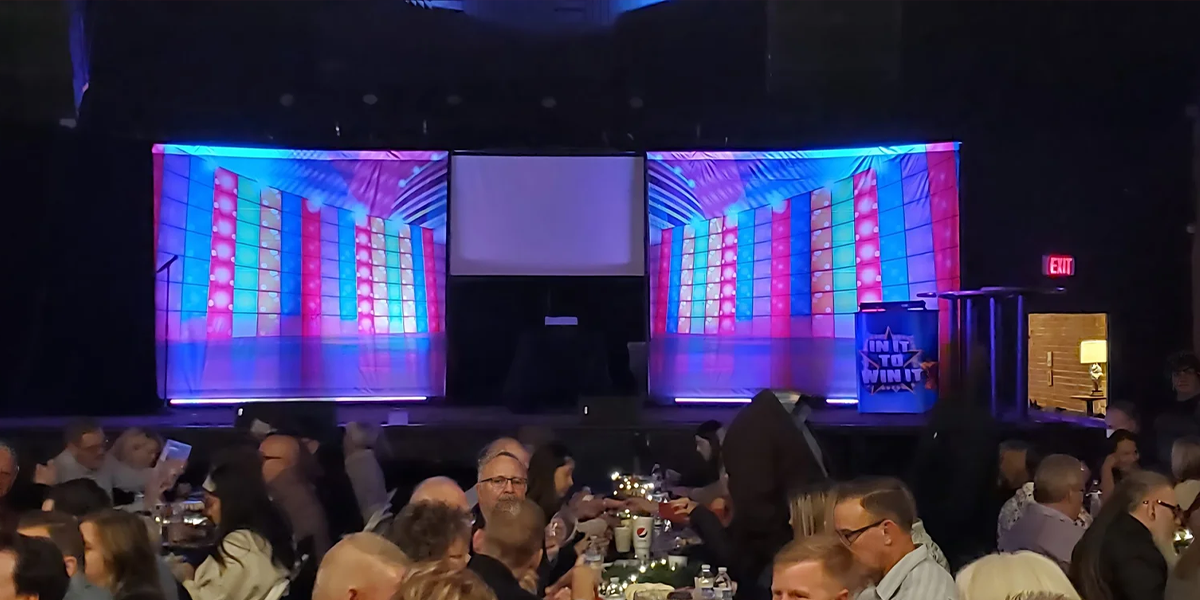
The high production values, clean audio systems, and bright visual displays signal to your employees that this isn’t a low-effort icebreaker. It shows your team that you respect their time, giving them a polished, professional atmosphere where they can relax, compete, and absorb key insights simultaneously.
Breaking Down Corporate Silos Through Friendly Workspace Competition
True collaboration cannot be forced through a corporate email blast or an awkward trust-fall exercise at a local park. It happens naturally when people are thrown into a fast-paced, low-stakes situation where they have to rely on each other’s random knowledge.
When you group people from different departments, you instantly crack open communication lines that might have been jammed for years. The funny side commentary and lighthearted trash talk create a level playing field where corporate titles vanish, and genuine human connections take over.
Suddenly, the quiet accountant is saving the day for the loud sales lead by remembering a random historical fact or technical detail. This playful environment gives your staff a safe place to experiment, talk strategy, and build organic trust without the weight of real-world project deadlines.
The Role of Structured Play in Fostering Natural Workplace Teamwork
When you introduce real props, digital buzzers, and scoreboard suspense to a room, the default professional shields come down instantly. People stop overthinking their responses and start operating on pure, gut-level instinct.
This spontaneous environment exposes hidden strengths within your team, allowing different types of thinkers to lead at various points in the challenge. The collective focus required to win a fast-paced round builds an immediate bond that feels entirely earned, helping cross-departmental connections pay massive dividends when your team returns to their normal tasks.
Employees stop treating each other like text-based email signatures and start seeing the real people behind the jobs. Those cross-departmental connections pay massive dividends when your team returns to their normal tasks on Monday morning.
Analyzing the Long-Term ROI of Immersive Corporate Entertainment
Is it actually worth cutting a check for a full-scale interactive production when a standard slide deck costs nothing to make? If you sit down and look at the real data surrounding employee retention, workplace morale, and training efficacy, the answer is clear.
A disconnected workforce quietly drains your company’s revenue through low productivity, missed details, and high turnover rates. Investing in high-quality shared experiences proves to your workforce that you value their energy levels and mental well-being, not just their daily output. The inside jokes and shared victories built during these sessions act as a social anchor that integrates new hires and rewards your veteran crew. When people genuinely look forward to your quarterly training sessions instead of trying to book fake sick days, your entire organizational culture gets an immediate upgrade.
Summary: Elevating Corporate Culture Through Structured Play
Revamping your corporate calendar does not have to be a late-night, stressful logistical nightmare for your internal planning committee. By leaning into interactive quiz formats, you can easily hand off the heavy lifting and lock in a guaranteed win that your team will discuss for months. These high-energy systems fix the age-old problem of audience boredom by turning passive listeners into the actual stars of the show.
When you need to guarantee a lively, high-retention atmosphere for your next big seminar, utilizing Live Game Show Events is your best strategic move for high-impact team-building activities of any group size. Contact us today to talk to our sales team or schedule a demo. It is time to retire the boring, static lectures and give your hard-working team a shared experience that truly honors their collective effort. Ready to turn your next mandatory training module into an unforgettable company win? Contact us today to talk to our sales team or schedule a demo.
Common General Questions
Q. How do corporate planners develop tailored corporate game show ideas for complex industries?
Professional entertainment production teams conduct detailed discovery sessions to analyze your organizational milestones, technical guidelines, and unique office language. They use these custom metrics to build original corporate game show ideas, blending your educational content with mainstream trivia to ensure maximum audience participation and data recall.
Q. Why is using a game show for corporate meetings more effective than standard PowerPoint lectures?
Standard slide presentations trigger cognitive fatigue, causing your team to lose focus and retain very little data. Deploying an interactive game show for corporate meetings creates real-time feedback loops using digital buzzers and live scoreboards, turning passive listeners into active participants who retain data far longer.
Q. What technical equipment do professionals bring to execute a successful game show for corporate meetings?
The production crew supplies everything required for a flawless performance, including lock-out buzzers, automated scoring software, sound systems, and video screens. This comprehensive gear setup ensures that your game show for corporate meetings feels like a real television broadcast, elevating the authority of your presentation.
Q. Can custom corporate game show ideas accommodate massive groups spanning hundreds of employees?
Yes, these interactive structures are built to expand dynamically for events of all sizes. Professional hosts design specific corporate game show ideas that utilize group-wide polling, multi-stage brackets, or smartphone inputs, allowing hundreds of regional attendees to play simultaneously without facing long technical delays.
Q. How do custom corporate game show ideas help bridge the gap between remote and in-person workers?
Modern production groups use web-based streaming software and unified buzzer apps to connect hybrid offices. This lets planners deploy creative corporate game show ideas that unite remote and on-site staff into shared competitive teams, breaking down geographic barriers through collaborative trivia play.
Q. How far in advance should a business plan a custom game show for corporate meetings?
We recommend booking your entertainment service four to eight weeks before your event date. This gives production specialists ample time to write custom trivia questions, test technical venue alignments, and refine your game show for corporate meetings to match your structural schedule perfectly.
Q. Where can companies source the best corporate game show ideas for annual holiday parties?
The best path is collaborating with a full-service production group that maintains a deep portfolio of diverse formats. They supply tested corporate game show ideas ranging from classic feud challenges to high-stakes trivia wheels, matching the specific entertainment goals and energy of your holiday celebration.
